Author

Clare Louise

Browsing

Infosys Share Price

In the ever-changing world of investing, finding stocks that can thrive and endure over the next decade is a challenging endeavor. However, India stands out as a promising destination on the global investment landscape. With its strong economic growth, thriving industries, and a history of resilience, India offers opportunities for long-term wealth creation. In this article, we explore India’s dynamic market and uncover the hidden gems that have the potential to generate substantial returns over the next 10 years. Want to know their names? Keep reading this post.

Tech Mahindra

Tech Mahindra is a leading player in the IT industry, known for its commitment to cutting-edge technologies like AI and blockchain. Their diverse clientele across different industries and regions provides stability in revenues, and strategic partnerships with top tech firms enhance their market presence and service offerings. With strong financial performance, Tech Mahindra stands out as an appealing investment prospect, securing its position at the forefront of innovation in the digital services landscape.

Wipro

An Indian multinational corporation that has a market capitalization of over Rs. 2.2 trillion, Wipro is known as one of the biggest IT service providers in the world. Apart from developing new technologies that are meant to satisfy the needs of its new clients, it also takes charge of social responsibility initiatives that allow it to build a strong brand. Wipro also has a very strong financial performance over the years and the track record is on point. So if you want a company that’s worth investing in, trust Wipro.

L&T Technology

L&T Technology is a company that lies at the heart of five vital segments within the information technology industry. What sets them apart is their strong and long-standing reputation in the construction sector, where they have made significant strides. Besides excelling in construction, they have also established themselves as key players in the medical devices, plant engineering, and telecom segments. Their expertise and influence in these areas have contributed significantly to their success in the IT world.

Tata Consultancy Services

When it comes to market capitalization, TCS share price stands out as the leading Indian IT firm. They offer a wide range of IT services, including digital platforms, business solutions, IT products, digital transformation, consultancy, and various other services. The company has been making successful strides in cutting-edge technologies like AI and machine learning, cloud computing, and blockchain. These ventures into advanced technologies have further strengthened their position in the IT industry.

Conclusion

If you’re thinking about investing in stocks and considering opening a demat account, it’s worth considering the IT sector. With everything going digital (almost everyone’s already on board!), the IT industry is thriving and showing impressive growth. It might be a good idea to keep an eye out for any upcoming IPOs in this sector, as they could offer the potential for significant returns on your investment. You can also stay updated on other share prices like Infosys Share Price to understand their track record. The IT sector seems to be on an upward trajectory, making it an attractive option for potential investors.

https://slickcashloan.com/payday-loans/easy-payday-loans.php

Introduction

Easy payday loans, with their swift and streamlined processes, are a beacon of relief in the financial world. They offer a short-term solution to cash needs, aiding individuals to manage financial surprises with ease and flexibility. This article dives deep into the numerous benefits and the positive impact of payday loans in our financial lives.

The Appeal of Ease and Speed

The main attraction of payday loans lies in their simplicity and expedited process. Unlike traditional loans, payday loans offer rapid access to funds, circumventing the need for lengthy paperwork. This ease alleviates stress, enabling individuals to confidently navigate unexpected expenses or short-term financial emergencies.

Technology Fuels Convenience

In this digital era, payday loan providers have revolutionized the borrowing experience. They’ve embraced technology to deliver a seamless online process, allowing borrowers to apply, receive approval, and access funds all from the comfort of their homes. This convenience caters to the digitally inclined generation, making financial management a stress-free affair.

Inclusivity: Empowering Diverse Credit Histories

Payday loans stand out for their inclusivity. While a good credit score can afford better loan terms, payday loan providers also cater to those with less-than-stellar credit histories. This approach ensures that everyone, irrespective of their past financial decisions, can find support in challenging financial circumstances.

Encouraging Financial Literacy and Planning

Beyond the immediate financial relief, payday loans also champion responsible financial behavior. They inspire borrowers to understand the terms of their loans, promoting informed decisions about repayment strategies. This proactive approach not only facilitates smooth repayments but also enhances financial literacy and responsibility.

Effective Repayment Strategies for Financial Control

Employing smart repayment strategies can revolutionize your financial journey. By aiming to pay more than just the periodic interest, borrowers can prevent a situation where the cost of the loan exceeds the original borrowed amount. This method helps individuals move from merely managing to mastering their finances, providing a sense of financial self-efficacy.

Maintaining a Positive Mindset: The Key to Financial Success

Navigating through the financial landscape requires a calm and positive mindset. This mental clarity encourages well-thought-out decisions over panic-induced choices. Payday loans act as a buffer in this journey, allowing borrowers to make decisions from a place of financial strength rather than desperation.

Conclusion: Easy Payday Loans, a Gateway to Financial Empowerment

In summary, easy payday loans are a practical and empowering solution to managing short-term financial obstacles. They combine the benefits of quick funds, an effortless application process, and the opportunity to enhance financial management skills. Importantly, these loans encourage borrowers to adopt financial literacy and responsibility, thereby promoting long-term financial health.

Easy payday loans signify more than a monetary transaction; they represent a stepping stone towards financial empowerment and independence. By opting for payday loans, individuals invest in their financial resilience and growth, setting the foundation for a future filled with financial stability and peace of mind.

Resource Link – https://slickcashloan.com/payday-loans/easy-payday-loans.php

loans for women

Introduction:

Housewives play a vital role in managing households and often contribute significantly to the family’s financial well-being. However, as non-working individuals, they may wonder whether they are eligible for a personal loan. While traditional lenders typically require proof of income, there are alternative options available for housewives to secure a personal loan. In this article, we will explore the possibilities and potential avenues for housewives to obtain a personal loan.

Joint Application with a Spouse:

Housewives can consider applying for a personal loan jointly with their spouse. If the spouse has a stable income and a good credit history, it can strengthen the loan application. Lenders often consider the combined income and creditworthiness of both applicants, increasing the chances of loan approval. However, it’s crucial to remember that both parties will be equally responsible for repaying the loan.

Collateral-based Loans:

Housewives who have assets or properties can explore collateral-based loans, such as secured personal loans. Collateral, such as gold, property, or fixed deposits, serves as security for the loan. Lenders may be more willing to extend credit based on the value of the collateral, even if the applicant doesn’t have regular income. It’s essential to evaluate the terms and conditions and assess the risk involved in using collateral for a loan.

Loans Against Fixed Deposits:

If a housewife has substantial savings in a fixed deposit account, some banks offer loans against those deposits. These loans are secured by the fixed deposit itself, reducing the lender’s risk. The loan amount can be a percentage of the fixed deposit’s value. This option allows housewives to leverage their savings without the need for regular income.

Microfinance Institutions:

Microfinance institutions (MFIs) focus on providing financial services to individuals who may not have access to traditional banking. Some MFIs offer personal loans to housewives and other non-working individuals based on their financial capabilities, repayment history, and character assessment. These loans for women often have smaller amounts and shorter tenures but can be a viable option for those in need of credit.

Creditworthy Co-Signer:

Housewives can explore the possibility of having a creditworthy co-signer for their personal loan application. A co-signer, such as a family member or close relative with a good credit score and steady income, can strengthen the loan application. The co-signer becomes equally responsible for loan repayment if the primary borrower is unable to fulfill the obligation. It’s crucial to have a mutual understanding and trust when considering this option.

Peer-to-Peer Lending:

Peer-to-peer (P2P) lending platforms connect borrowers directly with individual lenders. These platforms assess the borrower’s creditworthiness based on various factors, including their financial situation and purpose of the loan. Housewives can explore P2P lending as an alternative to traditional banking. However, it’s important to carefully review the terms, interest rates, and credibility of the platform before proceeding.

Conclusion:

Housewives, as non-working individuals, may face challenges when seeking a personal loan. However, there are viable options available. Joint applications with a spouse, collateral-based loans, loans against fixed deposits, microfinance institutions, creditworthy co-signers, and peer-to-peer lending platforms offer opportunities for housewives to access credit. It’s essential to thoroughly research and assess the terms, conditions, and risks associated with each option. By demonstrating financial responsibility and exploring these avenues, housewives can increase their chances of obtaining a personal loan to meet their financial needs.

GST billing app

In the competitive world of retail, efficient management of sales, inventory, and financial transactions is crucial for the success of Micro, Small, and Medium Enterprises (MSMEs). With the advent of major technology upgrades in this field, retail billing software has emerged as a game-changer for MSMEs, offering a wide range of benefits.
In this blog, we’ll take a closer look at the advantages of using retail billing software.

Streamlined GST Compliance Process.

One of the significant advantages of retail billing software is its ability to streamline Goods and Services Tax (GST) compliance. MSMEs often face challenges in accurately calculating and filing GST returns, leading to potential penalties and losses. Retail billing software equipped with a GST calculator online feature ensures automatic and accurate calculation of GST, eliminating errors and minimising the risk of non-compliance. MSMEs can simplify their tax processes, save time, and enhance compliance by generating error-free invoices and facilitating seamless integration with GST portals.

Efficient Inventory Management

Effective inventory management is essential for MSMEs to meet customer demands while minimising costs. Retail billing software plays a vital role in managing inventory efficiently. With the help of barcode scanning and real-time inventory tracking, MSMEs can monitor stock levels, identify popular products, and track sales trends. By gaining insights into consumer preferences, businesses can optimise inventory levels, reduce waste, and improve overall profitability.

Enhanced Customer Experience

Customers expect a seamless and hassle-free shopping experience in today’s digital age. Retail billing software offers MSMEs the tools to meet these expectations. With features such as quick billing, digital receipts, and multiple payment options, businesses can expedite checkout, reducing customer waiting time. Moreover, a GST billing app enables the generation of detailed invoices, offering transparency and credibility to customers. By providing a smooth and professional shopping experience, MSMEs can foster customer loyalty and gain a competitive edge.

Accurate Financial Reporting

Businesses rely on accurate financial reporting to make informed business decisions. Retail billing software simplifies financial management by generating comprehensive reports on sales, expenses, profits, etc. These reports provide valuable insights into the business’s financial health, enabling MSMEs to identify areas for improvement, track growth, and make data-driven decisions. With retail billing software, businesses can automate financial reporting, saving time and effort while ensuring accuracy.

Time and Cost Savings

Traditional billing methods can be time-consuming and prone to errors. Retail billing software significantly reduces manual effort, allowing MSMEs to streamline operations and save time. Businesses can focus on core customer service and business growth activities by automating repetitive tasks like generating invoices, managing inventory, and calculating taxes. Additionally, by minimising human error, retail billing software helps reduce costly mistakes, ensuring better financial management and profitability.

Retail billing software has revolutionised how MSMEs manage their sales, inventory, and financial processes. In today’s fast-paced retail landscape, MSMEs need a robust retail billing software platform to stay competitive and thrive. CaptainBiz offers a comprehensive suite of features that enable MSMEs to streamline their operations, ensure GST compliance, efficiently manage inventory, and save valuable time and costs. By leveraging this advanced technological solution, MSMEs can unlock new opportunities for growth and success.

Kupaa Consulting Services Hawaii

The decision to use a credit repair company should not be taken lightly. Choosing the wrong company might cost you hundreds, if not thousands, of money, and if they fail you could be looking at a delay of months, if not years, before you achieve your goal of a respectable credit score. Employing a credit repair company that is not reputable might get you in legal trouble, as if all of the above weren’t awful enough.

This page is meant to serve as a shopping guide for credit repair services, making the process less daunting and increasing the probability that you won’t be taken advantage of. What follows is a checklist you can use to help you choose a reliable credit repair service that will put in the time and effort necessary to get you where you want to be financially.

Learn the ins and outs of credit and how to fix your credit

A thorough familiarity with the inner workings of the credit reporting system should precede any search for a credit repair company. After all, you wouldn’t go vehicle shopping without first learning how to drive and getting a basic understanding of how automobiles function. Thus, before looking for a credit repair company, make sure you have a firm grasp on how credit bureaux operate, what information goes into your credit report, how lenders use credit reports, and why it is your responsibility to ensure that they are accurate. Choosing the Kupaa Consulting Services Hawaii is the best idea here.

It’s important to know what to expect from a credit repair company

Credit repair companies use the same tools that are available to you as a result of the various consumer protection legislation that has been implemented to help prevent you from being taken advantage of by creditors and the credit bureaux in order to clean up your credit reports; contrary to what some companies providing credit restoration services would have you believe, there are no hidden strategies involved in the process of restoring your credit. You may use these strategies by challenging both positive and negative items that show on your credit reports. The only real difference is that established credit repair companies will have the knowledge and experience to effectively implement these strategies. However, learning how to repair your credit the right way may take a lot of time and effort, including a lot of reading and trying numerous methods.

Check out the available options for assistance

Even if a credit repair company has the legal right to perform the same credit restoration services that you may accomplish on your own, not all of them really do. Credit bureau disputes are offered by many credit repair companies, but although they may be effective for certain customers, they are often less effective and take more time than when used in conjunction with other methods.

Examine not just the process but also the results

When compared to a newer organisation that is still learning the ropes, one with more experience can often provide outcomes more quickly and with more significance. The reason for this is because no credit repair firm can guarantee results without the cooperation of your creditors and the credit bureaux.

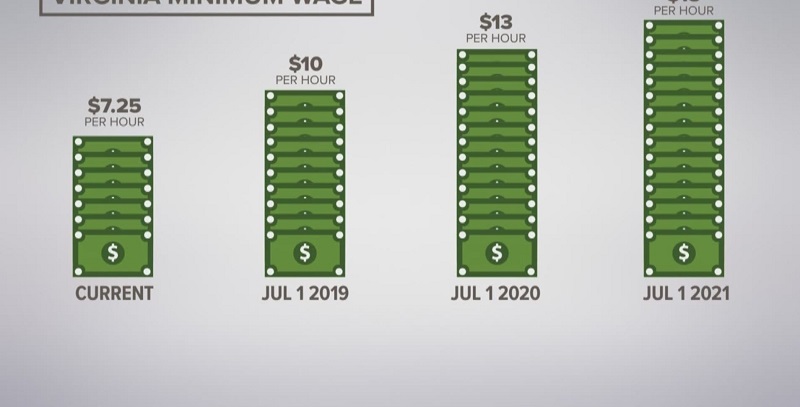
As a business owner in Virginia, you must follow all laws pertaining to the employment of Virginia residents. One of the most important labour regulations in each state is the minimum wage requirement.

Several U.S. states, including Alabama, Louisiana, Mississippi, South Carolina, and Tennessee, don’t have their own minimum wages and are thus only required to pay the federal minimum wage of $7.25 per hour to their employees. Since the federal minimum wage became the standard in 2009, this is the case. The minimum wage in the other 15 states that have their own minimum has also been maintained at $7.25 per hour by popular vote. North Carolina, Georgia, and North Dakota are only a few examples.

As a result, Virginia has the 19th highest minimum wage in the United States at $12.00 per hour as of the time of this writing, as compared to other states.

In the following sections, we will discuss the current and historic minimum wage in Virginia, the minimum wage for tipped workers, and offer some guidance to business owners who are trying to figure out how to pay their employees a fair income while still running an efficient business.

How much is the legal minimum wage per hour in your state?

The current minimum wage in the state of Virginia is $12.00 per hour for all employers. The following is a history of Virginia’s minimum wage along with its current and previous values, as reported by the US Labour Law Centre.

How can businesses like restaurants and others in Virginia make sure they’re paying their employees the minimum wage?

We have covered the effects of a minimum wage increase on workers, but what about on businesses? Inflation has caused severe harm to many businesses, and several restaurants have claimed that they are unable to pay for qualified workers.  In Virginia, eateries must have the financial means to pay their employees at least the minimum wage, preferably more. There has never been a higher minimum wage than there is now.

Since restaurants often only make a profit of 3-5%, their cost structures and profit margins have historically relied more heavily on minimum wage workers than those of other industries. Historically, firms with substantially larger profit margins than the average were able to pay their employees more. The restaurant industry will need to find ways to not just meet but even exceed the minimum wage requirement if we want it to remain a viable employment option, one in which employees want to stay at the same place (and not be forced to work many jobs).

How can restaurants and other small businesses in Virginia provide their employees with more competitive pay?

Much effort has to be done before working at a restaurant can provide a living wage, as was previously said. To begin, the old standard of estimating labour costs at 30% to 35% is no longer accurate. There is a strong likelihood that employment costs will eat up a larger chunk of your operational budget than they did a few years ago.

7 Reasons Why You Should Consider Hiring an Accountant for Sole Trader

As a sole trader, you’re responsible for every aspect of your business, from creating products or services to keeping track of finances. While it may seem tempting to handle everything on your own, the truth is that managing your accounting can be overwhelming and time-consuming. That’s where hiring an accountant for sole trader comes in. Here are seven reasons why you should consider hiring an accountant for your sole trader business.

Better Financial Management

An accountant has the expertise and knowledge to help you manage your finances better. They can help you create and maintain financial statements, organize your bookkeeping, and provide advice on budgeting and cash flow management. By having a clear understanding of your financial position, you’ll be able to make informed decisions about investments, expenses, and growth opportunities.

Minimize Tax Liability

As a sole trader, tax planning can be complicated, especially as the rules and regulations change frequently. An accountant can help you minimize your tax liability by identifying deductions and credits, ensuring compliance with tax laws, and filing your tax returns accurately and on time. This can help you avoid penalties and reduce your overall tax bill.

More Credibility

Having accurate and reliable financial statements can increase your credibility with investors, lenders, and stakeholders. It shows that you’re organized, transparent, and committed to managing your business effectively. An accountant can help you create professional financial reports that demonstrate your business’s financial health and potential.

Expert Advice and Guidance

An accountant can provide you with expert advice and guidance on a range of financial matters. They can help you interpret financial reports, identify areas for improvement, and plan for growth. They can also provide advice on business valuation, mergers and acquisitions, and transitioning to a different business structure.

Stay Up-to-Date with Regulations

Tax laws and regulations change frequently, and it can be challenging to keep up with them as a sole trader. An accountant can help you stay up-to-date with changes in tax laws and regulations that may affect your business. They can also help you understand the implications of these changes and how to comply with them.

Peace of Mind

Finally, hiring an accountant can give you peace of mind. You’ll have the assurance that your finances are being well managed and that you’re complying with tax laws and regulations. This can reduce stress and anxiety and allow you to focus on your core business activities.

Help with Financial Planning

An accountant can also help you with financial planning. They can assist you in creating a financial plan that aligns with your business goals and objectives. This can include budgeting, forecasting, and setting financial targets. With a solid financial plan in place, you’ll have a roadmap for achieving long-term success.

Assistance with Business Growth

As your sole trader business grows, financial management becomes more complicated. An accountant can help you navigate the challenges of growth by providing advice on financing options, cash flow management, and budgeting. They can also help you identify opportunities for expansion and create a plan for sustainable growth.

Access to Networking Opportunities

Many accountants work with other small businesses and entrepreneurs, which means they have access to valuable networking opportunities. By hiring an accountant, you’ll be able to connect with other professionals in your industry, attend relevant events and conferences, and gain exposure to new ideas and innovations. This can help you grow your business and stay ahead of the competition.

Conclusion

Managing your accounting can be overwhelming and time-consuming, but hiring an accountant for sole trader can provide many benefits. An accountant can save you time and effort, help you manage your finances better, minimize your tax liability, increase your credibility, offer expert advice and guidance, help you stay up to date with regulations and provide peace of mind. By hiring an accountant, you’ll have more time to focus on running your business while having the assurance that your finances are well taken care of.

brokerage calculator

Brokerage charges play a crucial role in the stock market, as they directly impact the profitability of investors and traders. Understanding how brokerage charges are calculated is essential for anyone looking to trade or invest in stocks. In this article, we will explore the diverse types of brokers, delve into the concept of brokerage charges, and discuss how they are calculated, taking a range of factors into account.

Types of Brokers:

Before diving into brokerage charges, it is important to understand the two main types of brokers in the stock market: full-service brokers and discount brokers.

Full-Service Brokers:

Full-service brokers provide a wide range of services to their clients, including investment advice, research reports, and personalized support. These brokers typically charge higher brokerage fees compared to discount brokers due to the additional services they offer. They are suitable for investors seeking comprehensive guidance and assistance in their investment journey. Examples for full-service brokers are ICICI direct, HDFC Securities, IIFL, Sharekhan, Motilal Oswal and many more.

Discount Brokers:

Discount brokers, on the other hand, offer trading services at lower brokerage charges. They provide a streamlined and technology-driven platform for executing trades without extensive research and personalized support. Discount brokers are ideal for self-directed investors and traders who rely on their own analysis and decision-making skills. Few examples of discount brokers in India are mStock by Mirae Assets, Zerodha, Upstox, Groww and many more.

Understanding Brokerage Charges:

Brokerage charges refer to the fees or commissions levied by brokers for executing buy and sell orders on behalf of their clients. The charges are based on the total traded value or quantity of shares involved in a transaction. The brokerage charges contribute to the revenue of brokerage firms. There are several brokerage charges such as –

– Delivery Charges

– Intraday Charges

– Futures Charges

– ETF 

– Options

– IPO and many more

Most of the Full service and Discount brokers charge a flat fee or fixed % fee for the above-mentioned charges, but mStock by Mirae Assets has Zero brokerage charges across all products. For instance, charges for Delivery by a full-service broker is around 0.55% on an average and upto Rs.20 by a discount broker, but mStock by Mirae Assets charges Zero-brokerage for the same service.

Moreover, with mStock you can open a Demat account by paying a one-time fee of just ₹999!

How Brokerage is Calculated and its Factors:

Brokerage charges can be calculated using different methods, and the actual calculation may vary depending on the broker and the specific transaction. An effortless way of calculating the brokerage is to use a brokerage calculator which does all the work for you in the most efficient way. Here are some common factors considered in calculating brokerage charges:

Percentage-based Brokerage:

Many brokers calculate brokerage charges as a percentage of the total traded value. For instance, if the brokerage charge is 0.5% and the total traded value is ₹100,000, the brokerage fee would amount to ₹500. The percentage-based method is commonly used by full-service brokers.

Fixed Fee per Trade:

Some brokers charge a fixed fee per trade, irrespective of the traded value. This method is often employed by discount brokers who offer zero brokerage charges on certain trades or charge a flat fee for every transaction. Fixed fee brokerage is suitable for frequent traders and investors who trade in large volumes.

Slab-based Brokerage:

Certain brokers offer slab-based brokerage charges, where the charges decrease as the traded value increases. For example, the brokerage fee could be 0.5% for trades up to ₹1,00,000, 0.4% for trades between ₹1,00,000 and ₹5,00,000, and so on. Slab-based brokerage encourages traders to trade in higher volumes by providing reduced charges for larger transactions.

Minimum Brokerage:

Some brokers impose a minimum brokerage charge, regardless of the trade value or percentage-based calculation. This ensures that the broker earns a minimum fee even on small trades. For instance, if the minimum brokerage is set at ₹20 and the calculated brokerage fee based on the percentage method is ₹15, the client will be charged ₹20.

Additional Charges:

Apart from brokerage charges, brokers may also levy additional fees for specific services. These charges may include Demat account charges, maintenance fees, transaction charges, Securities and Exchange Board of India (SEBI) turnover fees, Goods and Services Tax (GST), stamp duty, and other statutory charges. It is crucial to be aware of these additional charges as they can significantly impact the overall cost of trading.

Conclusion:

Brokerage charges are an integral part of trading and investing in the stock market. Understanding how brokerage charges are calculated is essential for investors and traders to make informed decisions. However, there are a few stock broking platforms like mStock by Mirae Assets who offer lifetime zero brokerage Demat account, allowing users to enjoy zero brokerage. This unique offering covers all products such as Delivery, Intraday, F&Os, Mutual Funds, IPO, Currency and is accessible for a one-time fee of ₹999.

If you click on one of our partners’ links and make a purchase, we may earn a fee, but this in no way affects our reviews or recommendations. This content is created independently from TIME’s editorial staff. Learn the details.

Traditionally, businesses have used a “sinking fund” to set aside money on a regular basis in order to retire a bond or repay a debt. Using a sinking fund will reduce the amount that the company must pay out of pocket when the loan matures. However, the same method may be used to save money and avoid utilising credit cards or an emergency fund for unexpected expenses or large expenditures. Companies aren’t the only ones that may benefit from sinking money; people can do the same.

In any case, what is the definition of a “sinking fund”?

The term “sinking fund” refers to a savings account set up specifically to cover a future expense. It’s not the same as a regular savings account or an emergency savings account, which may help you put money aside for things like replacing a broken water heater. Calculating how much money will be needed to cover an impending purchase and setting aside a certain amount of money each month may be thought of as creating a sinking fund.

Real-world use of a sinking fund example

Let’s say you’re planning on spending around $1,200 on a vacation sometime next year. A sinking fund may be used as an alternative to paying for large, unexpected bills using savings or utilising credit cards to finance a trip. Every month, you’ll put $100 more into the sinking fund. You won’t have to worry too much about your budget if you save up $1,200 by the end of the year to cover the cost of your vacation.

There are a number of different sinking fund account types.

You need to decide what sort of account to set up for the money if you think employing a sinking fund could be a successful technique. The following are some types of savings accounts that might be used as sinking funds.

Account with a checking feature

Free checking account funds are an attractive option for sinking funds. Having a checking account ensures that you can access your funds whenever you need them. A second checking account might be useful if you intend to make a single large purchase in the near future and wish to save money in a separate location. Find a checking account with a higher interest rate if you want to get the most out of your savings.

Commonplace savings accounts

A regular savings account might also serve as a sinking fund. A new savings account may be opened with the same financial institution as an existing one, making it easy to transfer funds between both. But regular savings accounts don’t often provide great interest rates, so if you want to earn money on your savings, this may not be the best option.

As the owner of a pawn shop, it can be challenging to find the right balance when negotiating with buyers and sellers. You want to make a profit, but you also want to ensure that everyone walks away feeling satisfied with the transaction.

Understanding the Pawn Shop Business Model

Before we dive into negotiation strategies, it’s important to understand how pawn shops operate. Pawn shops offer short-term loans to people who need quick cash. These loans are secured by collateral, such as jewelry, electronics, or other valuable items. If the borrower fails to repay the loan, the pawn shop can sell the collateral to recoup their losses.

When someone wants to sell an item outright rather than use it as collateral for a loan, the pawn shop will assess the item’s value and make an offer. This is where negotiation comes into play.

Tips for Negotiating When Selling to a Pawn Shop

1. Do Your Research

Before you approach a pawn shop, do some research to determine the item’s value. Look for comparable items on sites like eBay or Craigslist, and use this information to negotiate a fair price.

2. Be Realistic

While you may have sentimental attachment to your item, pawn shops need to make a profit to stay in business. Be realistic about what your item is worth and what you’re willing to accept.

3. Be Willing to Walk Away

If the pawn shop isn’t offering a fair price, be willing to walk away. You can always try to sell the item elsewhere or hold onto it until you find a buyer who is willing to pay what you’re asking.

Tips for Negotiating When Buying from a Pawn Shop

1. Be Polite

Pawnshop owners deal with a lot of people on a daily basis, and they’re more likely to work with someone who is polite and respectful.

2. Start Low

When making an offer, start low and work your way up. This gives you room to negotiate and ensures that you don’t overpay for the item.

3. Look for Flaws

Inspect the item carefully for any flaws or damage. If you find any, use this information to negotiate a lower price.

Negotiating with a pawn shop can be intimidating, but it doesn’t have to be. By doing your research, being realistic, and staying polite, you can walk away from the transaction feeling satisfied. If you’re looking to buy or sell at a pawn shop, keep these tips in mind, and you’ll be sure to get the best deal possible.

Publisher’s Details:

Maxferd Jewelry & Loan
201 Kearny St, San Francisco, CA 94108
(415) 915-7597
maxferd.com
info@maxferd.com

If you want to learn more about negotiating with pawn shop owners, check out our blog post, How To Negotiate With Pawn Shop Owners. Maxferd Jewelry & Loan is a trusted pawn shop located in the heart of San Francisco, California. Our experienced team has been serving the community for years with reliable, fast, and secure services.  Explore our services today and discover why we’re the best in the business.